The Magic & The Science
Little Magic Train combines movement, music, storytelling and sensory exploration to support how young children learn best.
Children don’t just watch – they become part of the adventure.
Each adventure is joyful and engaging, while building the foundations for communication, confidence and learning.
Every child is invited to join the adventure, from Neurodivergent, SEND, EAL, to PMLD.
Loved by nurseries, educators and families.
The Science Behind the Magic
Little Magic Train is built on well-established principles from early childhood development, neuroscience, and movement-based learning.
Movement, rhythm, repetition and storytelling are not just enjoyable – they play a key role in how young children learn, helping to build connections between the brain, body and language.
Developed by experienced early years practitioners with specialist training in movement, SEND, language, and early years tech.
Embodied Learning
Children learn through doing.
Research in embodied cognition shows that movement supports learning by engaging multiple areas of the brain at the same time.
When children move as they learn, they build stronger connections between language, action and memory, helping them to understand and retain new ideas more effectively.
Research references:
Glenberg (2010); Shams & Seitz (2008)
Neural Development
Repetition helps build the brain.
Repeated experiences strengthen neural pathways through a process known as myelination, where connections in the brain become faster and more efficient.
Combining movement, rhythm and language supports this process, helping to develop attention, memory and key learning skills over time.
Research reference:
Coyle, D. (2009)
Language Development
Rich language experiences matter.
Research has shown that some children, including those with Developmental Language Disorder (DLD), may process language differently.
This highlights the importance of structured, repeated and multi-sensory language experiences. Storytelling, rhythm and shared participation help children practise and strengthen communication in meaningful ways.
Research reference:
Krishnan, Watkins & Bishop (2022), University of Oxford
This research-informed approach sits at the heart of every Little Magic Train adventure. Supporting children to learn, connect and thrive through the structure of the adventures.
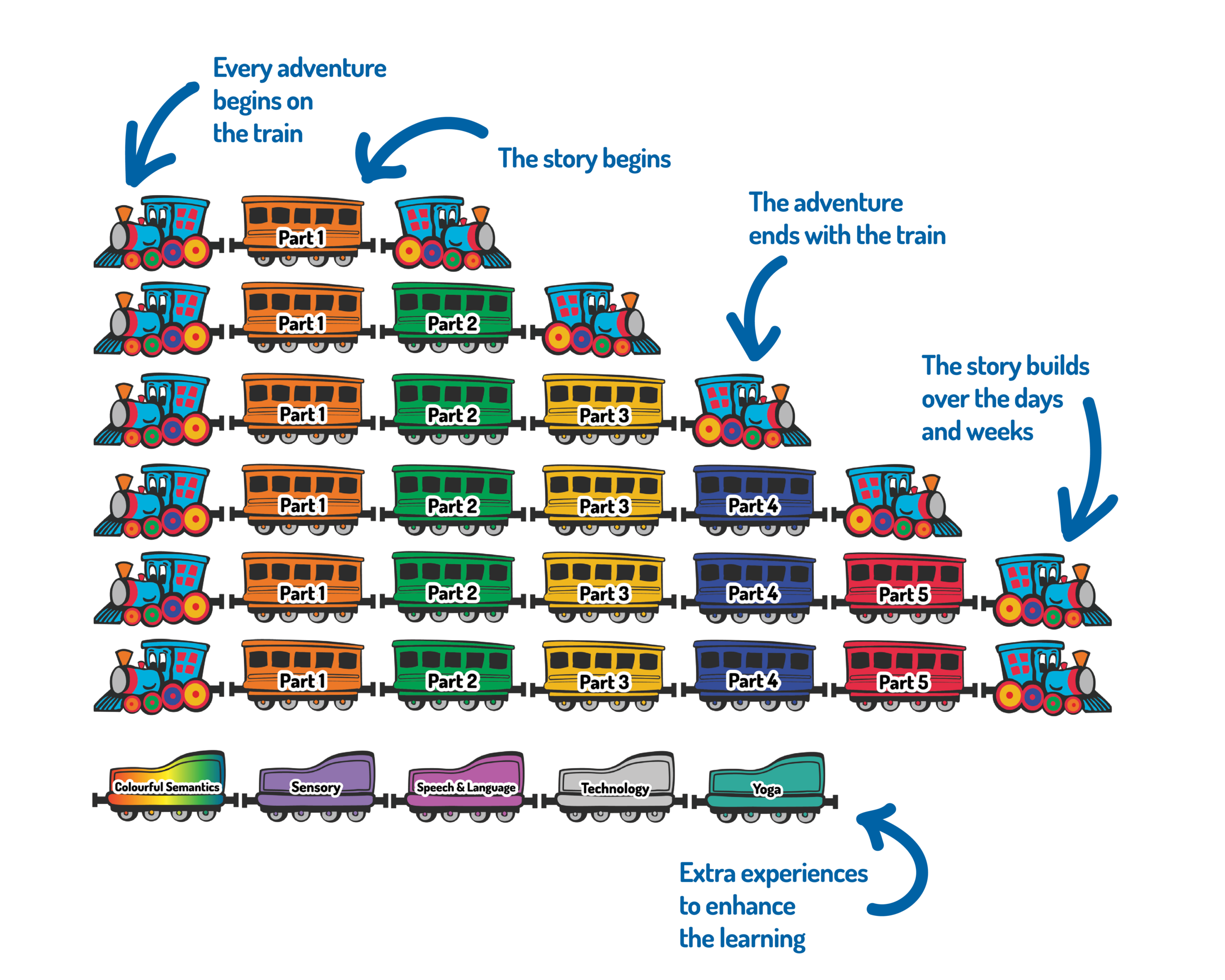
The Little Magic Train at the beginning and end acts like the “bread in a sandwich”, with the growing story (adventure) forming the filling. This familiar structure helps children feel confident, engaged and ready to take part.
Predictable routines and repeated patterns are especially valuable for young children, including those with additional needs, helping to support confidence, participation, and understanding.
Did you know that we have a Story Chain Train using Colourful Semantics, created by our fabulous communication engineer, Liz Shoreman, to help enhance language and communication?